What is AEO? The Complete Guide to Answer Engine Optimization

So here’s the thing. People aren’t Googling anymore. They’re asking.
They’re asking ChatGPT. They’re asking Claude. They’re asking Perplexity. And when they ask “What’s the best CRM for startups?” or “How do I design a custom motor?”, the AI doesn’t give them 10 blue links. It gives them an answer. With specific recommendations.
Answer Engine Optimization (AEO) is the practice of making sure your brand is the one that AI recommends when someone asks for help.
That’s it. That’s the whole game now.
“AEO isn’t about ranking #1 on Google. It’s about being the brand that AI recommends when someone asks for help.”
Think about that for a second. We spent the last 20 years obsessing over SEO. Keywords. Backlinks. Domain authority. All to get that coveted first-page ranking. And now? A user asks ChatGPT a question and gets a direct answer without ever seeing a search results page.
The brands mentioned in that AI response? They win. Everyone else? Invisible.
If you’re a founder, marketer, or growth leader, this isn’t optional anymore. It’s the difference between being recommended and being forgotten.
Why I Care About This
I spent four years building Presscart, a media marketplace with publishing relationships across 1,400+ credible outlets. TechCrunch, VentureBeat, USA Today, Architectural Digest. The whole traditional PR playbook.
And then I watched the game change.
I kept running into the same problem. Founders would come to us saying “We built this great product, but no one knows about us.” We could get them featured in respected publications. We could build their media presence. But increasingly, the question became: “What happens when someone asks ChatGPT about our category and we’re not mentioned?”
That question led to Lectern. And it led me to spend an embarrassing amount of time studying how AI systems decide who to recommend.
Here’s what I’ve learned.
AI as the New Trusted Advisor
Consumers are building relationships with their preferred AI model the way they used to build relationships with a trusted salesperson. A friend with good taste. A financial advisor. A knowledgeable colleague.
The more they use it, the more it learns about them. The more it learns, the more they trust its recommendations.
Here’s the key insight: when AI recommends something, it doesn’t feel like an ad. It feels like advice.
| Advertising | AI Recommendation |
|---|---|
| Paid placement | Earned trust |
| Consumer knows it’s an ad | Consumer perceives it as genuine guidance |
| Interruptive | Requested |
| Brand pushes message | AI pulls brand into conversation |
| Skepticism built in | Trust built in |
That’s a fundamental shift in how brands get discovered and chosen.
The Fundamental Shift in Discovery
Traditional search worked like this:
- User types keywords
- Google returns 10 blue links
- User clicks through multiple sites
- User evaluates and decides
AI-powered discovery is completely different:
- User asks a natural language question
- AI synthesizes information from multiple sources
- AI provides a direct answer with recommendations
- User often acts on the AI’s recommendation directly
You see the difference? There’s no clicking around. No comparison shopping. The AI does the work and makes the call. Being mentioned by an AI assistant is becoming more valuable than ranking #1 on Google for many queries.
And that’s kind of terrifying if you think about it. But also? Huge opportunity.
Why AEO Matters Right Now
Look, I get it. Every year there’s some new thing marketers are supposed to care about. But this one’s different. The data is kind of undeniable.
The Numbers
I could throw stats at you all day, but let me just share the ones that actually matter:
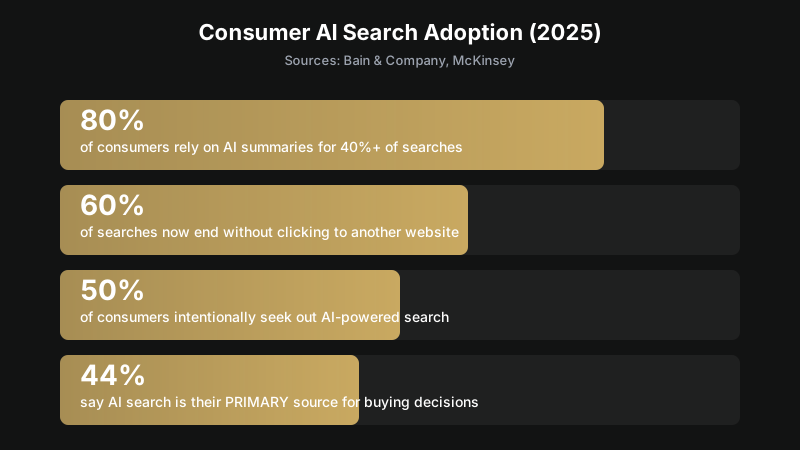
- 80% of consumers now rely on AI-generated summaries for at least 40% of their searches, according to Bain & Company’s 2025 research
- 60% of searches now end without users clicking through to another website. The “zero-click” phenomenon is reshaping how brands get discovered (Bain)
- 50% of consumers intentionally seek out AI-powered search engines, with 44% saying it’s their primary source for buying decisions, per McKinsey’s August 2025 survey
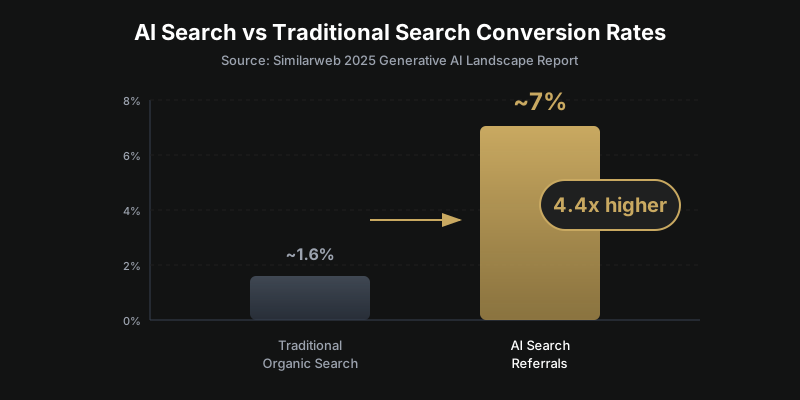
- AI search visitors convert at 4.4x higher rates than traditional organic search visitors (Similarweb 2025)
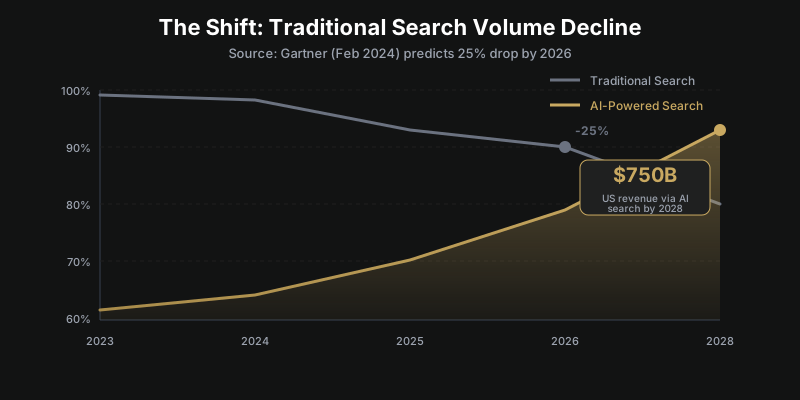
- Gartner predicts traditional search volume will drop 25% by 2026 due to AI chatbots and virtual agents
By 2028, McKinsey estimates $750 billion in US revenue will funnel through AI-powered search. And unprepared brands may see traffic from traditional search decline by 20-50%.
Why This Matters to Founders
Most companies right now have:
- No visibility into how AI represents their brand
- No awareness of whether AI knows their products exist
- No insight into whether AI recommends them or their competitors
- No capability to improve their AI presence even if they identify the problem
That last one is the killer. Even founders who recognize the shift often don’t know what to actually do about it.
The gap between knowing and doing is where most companies get stuck.
Trust in AI Recommendations
Here’s what’s wild. When an AI assistant recommends something, users perceive it as a trusted, objective suggestion. Unlike ads or sponsored content, AI recommendations feel earned and impartial.
Research from Similarweb shows AI chatbot referrals convert at approximately 7%. That’s significantly higher than typical traffic sources. Why? Because users who ask AI for recommendations have already progressed through awareness stages of the buying journey. They’re not browsing. They’re ready to act.
Zero-Click Discovery
This is the part that should scare every marketer who’s built their strategy around website traffic. Users may never visit your website but still become customers based on an AI’s recommendation.
Bain’s research finds that even among consumers skeptical of generative AI, roughly half report most of their queries are answered directly on the search page without a click.
The traditional funnel of “click → browse → evaluate → convert” is collapsing into “ask → trust → convert.”
Compounding Visibility
Here’s the thing about AI systems. They learn from the web. The more you’re mentioned in authoritative contexts, the more likely AI systems are to recommend you. Media coverage. Research papers. Industry publications. It all compounds.
Visibility compounds over time. The brands investing now are building a moat that will be incredibly hard to overcome later.
The AI Visibility Maturity Model
Before you can improve your AI visibility, you need to understand where you stand. We use a 5-level framework to assess this:
| Level | Goal | What It Means |
|---|---|---|
| 1 | Existence | AI acknowledges your company exists and speaks about it accurately |
| 2 | Product Awareness | AI knows what you sell. Your offerings, features, use cases |
| 3 | Accurate Representation | When someone asks about you specifically, AI sells your products correctly |
| 4 | Competitive Inclusion | AI includes you in the consideration set when users ask general category questions |
| 5 | Recommendation | AI actively recommends you ahead of competitors. Selling on your behalf |
Most companies don’t know where they are on this scale. And here’s the hard truth: you can’t jump from Level 1 to Level 5. Each level builds on the previous one.
If AI doesn’t even know you exist (Level 1), it definitely can’t recommend you (Level 5). You have to work your way up.
This framework helps set realistic expectations and creates shared language for progress. When we work with brands at Lectern, we start by establishing where they are today and defining what success looks like at each stage.
Which AI Models Actually Matter
Not all AI models are equally important for your business. Different models serve different audiences. Here’s the breakdown:
| Model | Primary Audience | Best For |
|---|---|---|
| Claude | Researchers, developers, technical professionals, scientists | Deep analysis, complex reasoning, professional decisions |
| ChatGPT | Broad consumer and professional base | General search, recommendations, productivity |
| Gemini / AI Overviews | Everyday Google users | Passive discovery. AI shapes what they see in search |
| Grok | X/Twitter power users, trend-followers | Viral products, cultural moments, what’s buzzing |
| Perplexity | Research-oriented users who want sourced answers | Considered purchases, comparisons, due diligence |
The strategic implications:
- B2B SaaS selling to developers: Prioritize Claude and ChatGPT
- DTC brand with trending products: Prioritize Grok and Gemini/AI Overviews
- High-consideration purchases: Prioritize Perplexity and Claude
Stop spraying effort across every model. Start focusing strategically on the specific models your customers actually use.
How AEO Differs from SEO
This is where a lot of people get tripped up. They think, “Oh, I’ll just do my normal SEO stuff and it’ll work for AI too.”
It doesn’t work that way. While AEO and SEO share some DNA, they require fundamentally different approaches.
| Factor | SEO (Google) | AEO (AI Assistants) |
|---|---|---|
| Content length | 300-500 words often sufficient | 5,000+ word comprehensive guides preferred |
| Relevance signal | Keywords, backlinks, CTR | Authoritative sources, research, citations |
| Link building | Quantity matters | Quality + authority matters more |
| Content type | Blog posts, guides | White papers, research, detailed analysis |
| Success metric | Rankings and traffic | Mentions and recommendations |
| Authority building | Organic keyword rankings | Academic partnerships, media coverage, research |
| Timeline | 6-12+ months for significant results | Can see results in 1-3 months with right strategy |
The Depth Difference
This is probably the biggest one. Google often rewards relatively short, focused content that answers a specific query. AI systems, however, need material to synthesize and cite. They prefer comprehensive, authoritative content that demonstrates genuine expertise.
A 1,000-word blog post might rank well on Google. But a 5,000-word comprehensive guide is far more likely to be cited by AI assistants. Because it provides the depth and nuance that AI systems need to form confident recommendations.
In other words: thin content is dead for AEO. Go deep or go home.
The Authority Difference
SEO authority is largely built through backlinks and organic rankings. AEO authority is built through a broader combination:
- Media coverage in respected publications
- Academic partnerships and research collaborations
- Speaking engagements at industry events
- Podcast appearances that establish thought leadership
- Industry recognition from associations and standards bodies
AI systems draw from all of these sources when forming their understanding of who the authoritative voices are in any given space. It’s not just about your website anymore. It’s about your entire presence across the web.
The Execution Gap
Here’s something I’ve noticed talking to founders: most understand that AEO matters. They get the concept. But there’s a massive gap between understanding the problem and actually solving it.
Plenty of tools can help you optimize your onsite content. They can guide you on technical improvements. That’s the easy part.
The hard part is offsite execution. Actually securing citations and backlinks from the credible, authoritative sources that AI models reference. Getting mentioned in the places that matter.
Most companies have no capability to do this. They can see the gap but can’t close it.
This is actually why we built Lectern the way we did. After four years building publishing relationships across 1,400+ outlets at Presscart, we realized that network was exactly what brands need to build AI visibility. Intelligence is necessary but not sufficient. You need execution alongside intelligence.
The AEO Strategy Framework: A 3-Phase Approach
Okay, so now you’re probably thinking: “This all sounds great, but what do I actually do?”
Fair question. Effective AEO strategy follows a three-phase approach that balances quick wins with long-term authority building.
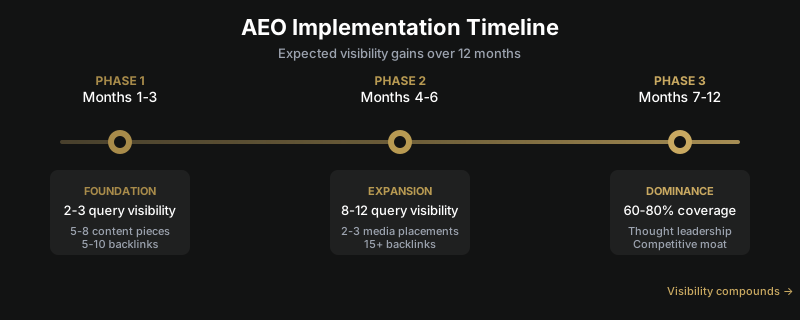
Phase 1: Foundation & Quick Wins (Months 1-3)
The first phase is about establishing your baseline and capturing low-hanging fruit. Don’t try to boil the ocean here.
Content Goals:
- Publish 5-8 high-impact comprehensive guides (5,000+ words each)
- Target low-competition, high-value queries where you can establish authority quickly
- Focus on “how to” and comparison content that AI systems love to cite
Outreach Goals:
- Send 15+ journalist and media pitches
- Acquire 5-10 high-quality backlinks (DA 50+)
- Begin podcast outreach for speaking opportunities
Measurement:
- Establish baseline AI visibility metrics
- Track which queries mention your brand
- Monitor competitor visibility for benchmarking
Expected Outcomes:
- Initial AI visibility for 2-3 key queries
- Foundation content that will compound over time
- Early relationships with media and industry contacts
Phase 2: Expansion & Acceleration (Months 4-6)
With your foundation in place, Phase 2 is about expanding your footprint and accelerating authority.
Content Goals:
- Publish 5-8 additional content pieces
- Create comparison and competitive analysis content
- Develop industry-specific guides for target verticals
Outreach Goals:
- Achieve 2-3 media placements in respected publications
- Book 1-2 podcast appearances
- Formalize 2-3 university or research partnerships
- Acquire 15+ additional high-quality backlinks
Expected Outcomes:
- AI visibility for 8-12 key queries
- Measurable traffic growth from AI referrals
- Established relationships with key journalists and influencers
Phase 3: Thought Leadership & Dominance (Months 7-12)
Phase 3 is about cementing your position as the authoritative voice in your space. This is where it gets fun.
Content Goals:
- Publish research in industry journals (IEEE, trade publications)
- Create original research and data that others will cite
- Develop advanced technical content that demonstrates deep expertise
Outreach Goals:
- Present at industry conferences
- Build sustained podcast and speaking presence
- Establish advisory relationships with academic institutions
- Achieve consistent media coverage
Expected Outcomes:
- AI visibility for 15-20+ key queries (60-80% coverage)
- Recognition as a thought leader in your space
- Sustainable competitive moat that’s difficult for others to replicate
Content Strategy for AEO Visibility
Not all content is created equal when it comes to AEO. Here’s how to prioritize your content investments for maximum AI visibility.
Highest-Value Content Types
1. Comprehensive Technical Guides (5,000-6,000 words)
These are your workhorses. Target “How to [solve problem]” queries with exhaustive, well-researched guides that demonstrate genuine expertise.
Example: “How to Design a Custom Electric Motor: A Complete Engineering Guide”
Why it works: AI systems need depth to form confident recommendations. Comprehensive guides provide the material for AI to cite and synthesize.
2. Comparative Analysis Content (4,500-5,000 words)
AI systems frequently encounter “Compare X vs Y” queries and love content that helps them synthesize balanced comparisons.
Example: “PCB Stator Motors vs Traditional Windings vs Axial Flux: A Complete Comparison”
Why it works: Comparison queries are common, and AI needs source material that presents multiple perspectives fairly.
3. Sustainability & Innovation Angles (4,000-5,000 words)
Emerging trends have lower competition and higher opportunity. Position yourself at the forefront of where your industry is heading.
Example: “Sustainable Motor Design: Achieving High Performance Without Environmental Compromise”
Why it works: Emerging topics have fewer authoritative sources, making it easier to establish dominance.
4. Industry-Specific Guides (4,000-5,000 words)
Target application-specific searches where you can demonstrate specialized expertise.
Example: “Motor Design for Medical Devices: Compliance, Performance, and Reliability”
Why it works: Niche queries often have fewer competing voices, and specialists are valued by AI systems.
5. Problem-Solution Methodology Content (3,500-5,000 words)
AI values actionable workflows and processes. Document your methodology.
Example: “Rapid Prototyping: From Concept to Production in 90 Days”
Why it works: Process-oriented content demonstrates real expertise and is highly citable.
Content to Avoid
Let me save you some time. Don’t bother with:
- Thin content under 2,000 words
- Purely promotional content without educational value
- Content without unique insights or proprietary data
- Duplicate content across multiple pages
- News-style content that becomes outdated quickly
Authority Building: The Key to AEO Success
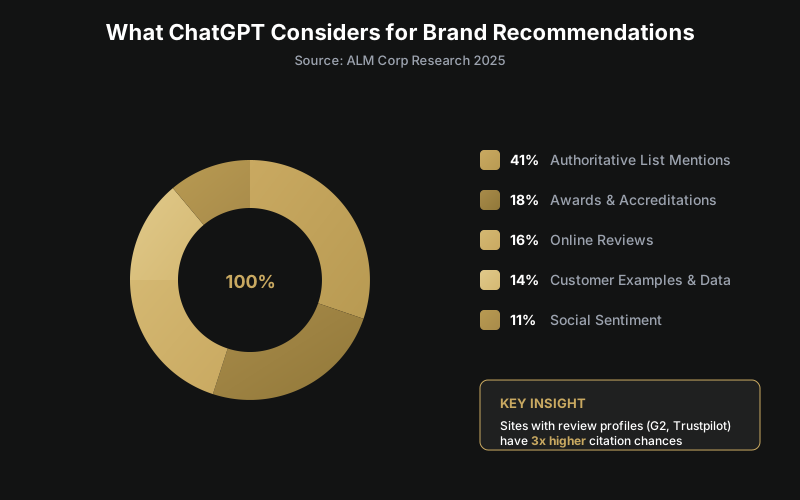
Content alone isn’t enough. AI systems assess authority through multiple signals. Research from ALM Corp found that for commercial recommendations, ChatGPT primarily considers:
- Authoritative list mentions (41%)
- Awards and accreditations (18%)
- Online reviews (16%)
- Customer examples and usage data (14%)
- Social sentiment (11%)
Notably, domains with profiles on platforms like Trustpilot, G2, Capterra, and Yelp have 3x higher chances of being cited by ChatGPT.
So what does this mean practically? Here’s how to build the authority that gets you mentioned.
Authority Building Hierarchy
Tier 1: High-Authority Links (DA 75+)
- IEEE publications and academic journals
- Industry standards organizations (NEMA, SAE, ISO)
- Major research institutions
- Effort: Hard | Timeline: 3-6 months | Value: Very High
Tier 2: Industry Authority (DA 60-74)
- Trade publications (EE Times, Design News, Engineering.com)
- Industry-specific media
- Respected industry blogs
- Effort: Medium | Timeline: 1-3 months | Value: High
Tier 3: Accessible Authority (DA 50-59)
- Industry directories
- University research departments
- Mid-tier industry publications
- Effort: Easy | Timeline: 1-2 months | Value: Medium
Tier 4: Quick Wins (DA <50)
- Community forums and Q&A sites
- Startup and industry blogs
- Podcast appearances
- Effort: Very Easy | Timeline: 1 month | Value: Low-Medium
The Media Strategy
Media coverage is one of the fastest paths to AEO authority. Here’s how I’d prioritize:
1. Podcasts (Fastest Path to Thought Leadership)
- Average booking time: 2-4 weeks
- Reach: 5,000-50,000+ listeners
- Best for: Building speaking authority and generating content
- Start here. It’s the most accessible and compounds quickly
2. Trade Publications (Most Accessible for B2B)
- Booking time: 2-6 weeks
- Reach: 50,000-200,000+ readers
- Best for: Industry credibility and backlinks
- These journalists are always looking for expert sources
3. Consumer Tech Media (Hard, High Impact)
- Booking time: 4-12 weeks
- Reach: 500,000+ readers
- Best for: Breakthrough moments and major announcements
- Save for major news. Don’t waste pitches on minor updates
4. Academic/Research (Slowest, Highest Authority)
- Booking time: 3-6+ months
- Authority value: Very high
- Best for: Long-term positioning as genuine expert
- Start the relationships early. They take time to develop
The University Partnership Advantage
One of the most underutilized AEO tactics is academic partnerships. Universities and research institutions carry enormous weight with AI systems. Consider:
- Research collaborations that result in published papers
- Advisory board positions at relevant programs
- Guest lectures that establish teaching credibility
- Joint research projects that generate citable data
A single IEEE publication or university research partnership can be worth more for AEO than dozens of blog posts. I’m not exaggerating.
Measuring AEO Success
You can’t optimize what you don’t measure. Here’s how to track your AEO progress.
Key Performance Indicators
| Metric | Target (6 Months) | Measurement Method |
|---|---|---|
| AI Query Visibility | Top 5 for 5+ queries | Manual testing across ChatGPT, Claude, Perplexity |
| Query Coverage | 60-80% of priority queries | Track mentions across all target queries |
| Media Placements | 5+ articles | Tier 1-2 publications |
| Podcast Appearances | 3-5 episodes | Speaking engagements completed |
| Backlinks Acquired | 20+ | Domain authority 50+ |
| Organic Traffic Growth | 150%+ | Google Analytics for target content |
How to Track AI Visibility
Tracking AI visibility can be done manually or through dedicated tools:
Manual approach:
- Identify your priority queries (20-30 questions your ideal customers ask)
- Test each query monthly across ChatGPT, Claude, and Perplexity
- Record whether you’re mentioned, and in what context
- Track changes over time to see the impact of your efforts
Automated approach: Tools like Lectern automate this process by continuously monitoring your visibility across all major AI assistants, alerting you to changes, and tracking competitor mentions. We measure how you show up across ChatGPT, Gemini, Perplexity, Claude, and Grok. Then we help you focus on the specific models your customers actually use.
Whether you track manually or use dedicated tools, understanding your current visibility is essential for knowing whether your strategy is working.
The Visibility Scoring Framework
For each priority query, track:
- Mentioned (Yes/No): Are you mentioned at all?
- Position (1-5+): Where in the response do you appear?
- Context (Positive/Neutral/Negative): How are you characterized?
- Competitor Mentions: Who else is mentioned?
Over time, you should see your visibility score increase as your authority compounds.
Strategic Wisdom
After spending way too much time thinking about this stuff, a few key principles keep coming up:
Don’t Compete on Brand. Compete on Methodology.
Here’s the counterintuitive thing. The most powerful AEO strategy isn’t brand positioning. It’s methodology and expertise. Instead of trying to out-market larger competitors, focus on:
- Owning the “how”: Document your process, methodology, and approach
- Leading on innovation: Position yourself at the frontier of new developments
- Demonstrating expertise: Show your work, share your thinking, teach your craft
A startup can’t outspend an incumbent on brand advertising. But a startup can absolutely out-teach them and become the recognized expert on methodology. I’ve seen it happen.
The Infrastructure Story Wins Over the Service Story
For B2B companies, AEO visibility often goes to:
- Tools and platforms that enable solutions
- Methodologies and frameworks that others can apply
- Infrastructure that powers the industry
Service companies have narrower audiences. Infrastructure and methodology companies get cited by everyone. Researchers, competitors, analysts, customers.
Comprehensive Beats Thin. Every Time.
5,000-word comprehensive guides outperform 1,000-word blog posts for AI visibility because:
- AI systems need material to synthesize and cite
- Thin content lacks depth for credible recommendations
- Comprehensive content appears in more diverse queries
- Detail builds perceived authority
When in doubt, go deeper rather than broader.
Authority Building Compounds
The timeline for AEO success:
- Month 1: Content publishing → Small visibility gains
- Month 2: Media + backlinks → Accelerating visibility
- Month 3: Speaking + partnerships → Major authority boost
- Months 4-6: Compounding effect as multiple channels reinforce each other
Early effort pays dividends later. The brands that invest in AEO now will have significant advantages that latecomers will struggle to overcome.
Getting Started
If you’re ready to start building your AI visibility, here’s your immediate action plan:
Week 1: Assessment
- Identify 20-30 priority queries your ideal customers ask
- Test your current visibility across ChatGPT, Claude, and Perplexity (or get a Lectern audit to automate this)
- Benchmark competitor visibility
- Identify gaps and opportunities
Week 2-4: Foundation
- Outline your first 2-3 comprehensive content pieces
- Create a target list of podcasts, publications, and journalists
- Identify potential academic or research partnerships
- Set up tracking for your priority queries
Month 2-3: Execution
- Publish your first comprehensive guides
- Begin outreach to podcasts and publications
- Start building relationships with journalists and researchers
- Monitor visibility changes and adjust strategy
Ongoing
- Maintain consistent publishing cadence (1-2 pieces/month minimum)
- Continuously build authority through media and partnerships
- Track and optimize based on visibility metrics
- Expand into new query clusters as you establish dominance
The Bottom Line
AEO represents the most significant shift in digital marketing since the rise of SEO itself. The brands that understand this shift and invest early in AI visibility will capture the attention, trust, and business of the next generation of customers.
Here’s the good news. Unlike SEO, where incumbents have decades of accumulated advantage, AEO is a relatively level playing field. The strategies outlined here work for startups and enterprises alike. What matters is consistent execution over 6-12 months.
The question isn’t whether AEO matters. It’s whether you’ll be the brand that AI recommends or the brand that gets left behind.
Frequently Asked Questions About AEO
What does AEO stand for?
AEO stands for Answer Engine Optimization. The practice of optimizing content and brand presence to be recommended by AI-powered answer engines like ChatGPT, Claude, Perplexity, and Google’s AI Overview.
How is AEO different from SEO?
SEO focuses on ranking in search engine results pages (SERPs), while AEO focuses on being recommended by AI assistants. Key differences:
- Content length: SEO often works with 300-500 words; AEO prefers 5,000+ word comprehensive guides
- Success metric: SEO measures rankings and traffic; AEO measures mentions and recommendations
- Authority signals: SEO relies heavily on backlinks; AEO values media coverage, research partnerships, and thought leadership
How long does AEO take to work?
Most brands see initial visibility gains within 1-3 months, with significant results in 6-12 months. The timeline typically follows:
- Months 1-3: Foundation building, initial visibility for 2-3 queries
- Months 4-6: Expansion, visibility for 8-12 queries
- Months 7-12: Thought leadership, 60-80% coverage of priority queries
What content works best for AEO?
AI systems prefer comprehensive, authoritative content they can cite and synthesize:
- Comprehensive guides (5,000-6,000 words)
- Comparative analysis (“X vs Y” content)
- Methodology content documenting processes and frameworks
- Original research with proprietary data
- Industry-specific guides demonstrating specialized expertise
How do I measure AEO success?
Track these key metrics:
- AI query visibility: Are you mentioned in responses to your priority queries?
- Mention position: Where do you appear in AI responses (first mention vs. later)?
- Context quality: Are mentions positive, neutral, or negative?
- Query coverage: What percentage of your priority queries mention you?
Can small companies compete in AEO?
Absolutely. AEO is a relatively level playing field compared to SEO. Bain’s research found that just 16% of brands today systematically track AI search performance. That’s a massive gap that early movers can exploit.
Unlike SEO, where incumbents have decades of accumulated backlinks and authority, AEO rewards:
- Deep expertise and methodology documentation
- Original research and data
- Thought leadership and speaking authority
- Quality over quantity in content and backlinks
A startup that out-teaches its competitors can win in AEO, regardless of size. I’ve seen it happen.
What’s the relationship between AEO and traditional SEO?
AEO and SEO are complementary, not competing strategies. Strong SEO helps your content get indexed and discovered, which feeds into AI training data. However, AEO requires additional focus on:
- Comprehensive depth over keyword optimization
- Authority building through media and partnerships
- Structured content that AI can extract and cite
- Original research that establishes expertise
Lectern is a content intelligence platform that helps growth-stage brands turn AI visibility into traffic and revenue. We measure how you show up across major AI models, benchmark you against competitors, and close the gap through content and publishing systems built over years in traditional media. Get started today.
Written by

Edgar Li
Cofounder at LecternEdgar is a cofounder at Lectern, helping growth-stage companies teach AI models to accurately represent and recommend their products - turning that visibility into high-intent traffic and revenue. A product builder who thinks in narrative and customer value, he now applies that lens to helping founders win in AI search.