Lectern vs. Profound: Which AI Visibility Platform Is Best for Startups?
The ways in which people discover products are changing. Instead of going through typical search results and clicking on the first result (more often than not, an ad), more people are directly asking AI assistants for recommendations. That means that if you’re a startup looking to build visibility, your focus should be not only on ranking in regular search engines like Google, but in making sure you’re recommended by AI.
Two examples of platforms that seek to help brands embrace this new paradigm are Lectern and Profound. Both come with a similar premise of helping you track your AI visibility, but the ways they approach it are different, and those differences might be key to deciding which of these two best fits your business.
What Is Lectern?
Lectern is a content intelligence platform that helps growth-stage companies turn AI visibility into traffic and revenue. Unlike marketing intelligence dashboards that stop at analytics, Lectern provides execution alongside intelligence, first by showing you where the gaps are, then by helping you close them.
The platform is built by the team behind popular media marketplace, Presscart. A company that has spent the past four years cultivating relationships with publishers across every major vertical. That’s why Lectern can connect you directly to 1,400+ credible outlets, including names like TechCrunch, VentureBeat, Architectural Digest, and USA Today. It’s not a third-party integration; it’s the same publishing network Presscart clients have used to secure thousands of guaranteed placements.
Lectern works through chat. You describe what you’re trying to achieve, and the AI agent handles research, analysis, and execution using 40+ specialized tools all focused on helping you get recommended by AI. Need to check how often ChatGPT recommends your competitors? The agent runs the analysis. Want to create content optimized for AI citations? The agent drafts it using your brand voice. Looking for the best outlet to place a thought leadership article? The agent searches the network through Presscart’s marketplace to handle placement.
Behind those tools are 30+ domain expertise “skills” covering everything from AEO strategy to LinkedIn growth to cold email outreach. These aren’t generic recommendations; they’re frameworks developed from real playbooks, giving you access to vetted knowledge in the areas that matter most.
What Is Profound?
Profound is an enterprise-grade marketing intelligence platform. It tracks how often AI assistants mention your brand across major AI engines and provides dashboards to check factors like citation analysis, competitive benchmarking, and sentiment tracking.
The platform also offers workflows with templates for listicles, how-tos, and comparison articles. These tools can help teams create AI-optimized articles and publish them directly to their CMS.
Their messaging explicitly targets enterprise brands: companies with procurement processes, dedicated data teams, and existing marketing infrastructure. For startups with leaner budgets and scrappier teams, the fit is less clear: enterprise onboarding takes time, pricing isn’t built for early-stage burn rates, and the platform assumes you already have internal resources to act on what the dashboards show you.
How These Approaches Impact Your AI Visibility Strategy
The fundamental difference between Lectern and Profound comes down to one question: Do you need insights, or do you need results?
Lectern helps you take care of the entire media process. When you discover a gap in your visibility, you don’t need to switch to a separate content tool, hire a writer, or figure out where to publish. The same platform that identified the gap helps you close it. Your visibility check reveals that competitors dominate a key query? Lectern’s agents can research the topic, draft an optimized article, and coordinate placement on a relevant publication, all in the same conversation.
The platform understands that LLMs pull recommendations from authoritative third-party sources, not just your blog. That’s why it covers onsite optimization as well as offsite publishing.
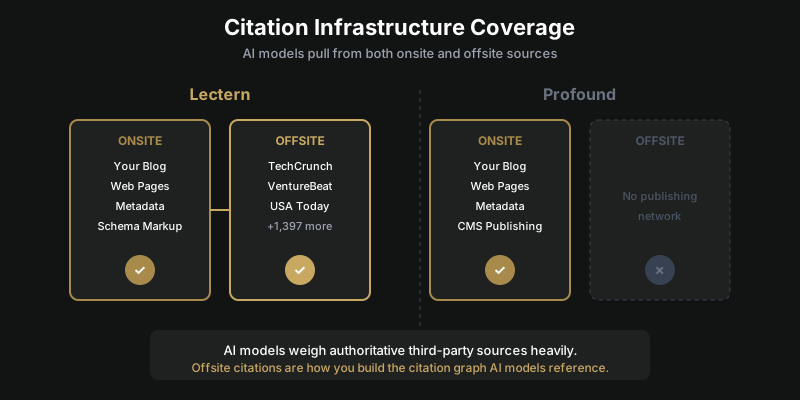
Profound, on the other hand, is built for big-picture monitoring. If you’re a large, established company with dedicated data teams, the platform provides the dashboards to track your AI visibility across multiple platforms. It can also help you create AI-optimized content to publish directly to your own blog.
However, when it comes to offsite citations (getting mentioned on authoritative third-party sources that AI models actually trust), Profound can’t help, as it has no built-in publishing network, whereas Lectern can secure placements across 1,400+ credible outlets, which is how you build the citation graph that AI models reference.
A Side-by-Side Comparison
1. Execution vs. Monitoring
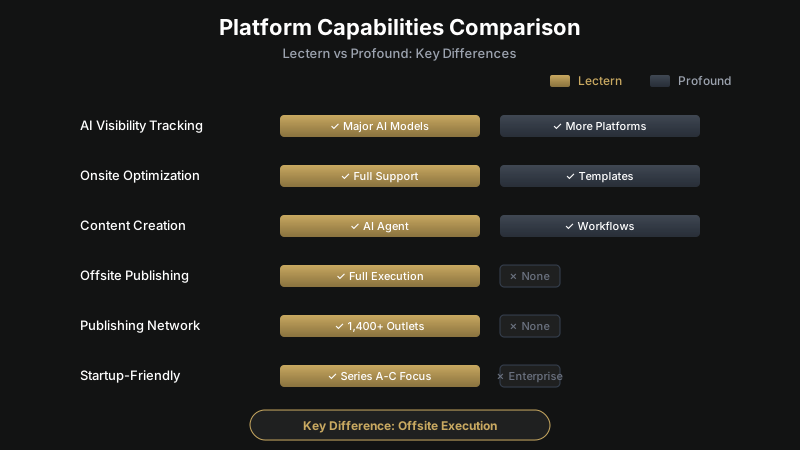
Lectern: Platform focused on execution alongside intelligence. Lectern can research, write, optimize, and distribute content, and its access to Presscart’s 1,400+ credible publications means you can go from visibility gap to published article.
Profound: Analytics platform with onsite content tools. Can publish to your CMS, but no access to third-party publishers.
2. Content Strategy
Lectern: Onsite optimization (your blog, web pages, metadata) plus offsite publishing through an established media network. It recognizes that LLMs weigh authoritative third-party sources heavily.
Profound: Onsite optimization only. No publishing network to secure the offsite citations that can meaningfully influence AI recommendations.
3. Interaction Model
Lectern: Conversational. You chat with an agent expressing your goals, and the agent handles research, analysis, and execution.
Profound: Traditional dashboard interface. Requires navigating multiple screens and reports.
4. Target Market
Lectern: Built for growth-stage, VC-backed companies. Series A through Series C startups where the founder is still close to GTM decisions. Multi-tenant architecture supports team collaboration.
Profound: Built for enterprise brands with dedicated data teams and procurement processes.
Who Should Use Lectern?
Lectern is ideal for:
- Growth-stage, VC-backed companies (Series A through Series C) that need AI visibility without enterprise complexity
- Marketers who want one platform for research, content, and distribution
- Agencies with multiple clients in different industries looking for visibility workflows
- Teams focused on execution who want to move from gap to action quickly
- Brands using Presscart looking to build an SEO and AEO strategy and future tracking integrated with their media placement strategy
Who Should Use Profound?
Profound is ideal for:
- Enterprise brands with budget cycles and procurement processes
- Companies with internal teams that can act on insights independently
- Organizations that already have content and SEO teams in place to handle execution
- Fortune 500 CMOs who need polished dashboards for board presentations
Frequently Asked Questions
Can I use both Lectern and Profound?
It’s absolutely possible, but there’s significant overlap in their monitoring capabilities. If you’re a large enterprise that needs maximum AI engine coverage for monitoring but also wants execution tools, you could use, for example, Profound for a big-picture look at your strategies and Lectern for taking action.
Does Lectern track as many AI platforms as Profound?
Lectern tracks the major AI assistants (ChatGPT, Claude, Perplexity, Gemini), which represent the vast majority of AI-driven product discovery. More importantly, it helps you focus on the specific models your customers use, not optimize generically across every platform.
Profound tracks more platforms, but for most brands, the additional coverage provides marginal value compared to execution capabilities.
Which platform is better for agencies?
Lectern’s multi-tenant architecture means one agency can handle multiple clients from one account. You can switch between team workspaces, and each client’s data stays isolated. Profound’s enterprise focus means agency pricing typically requires custom contracts.
How fast can I see results?
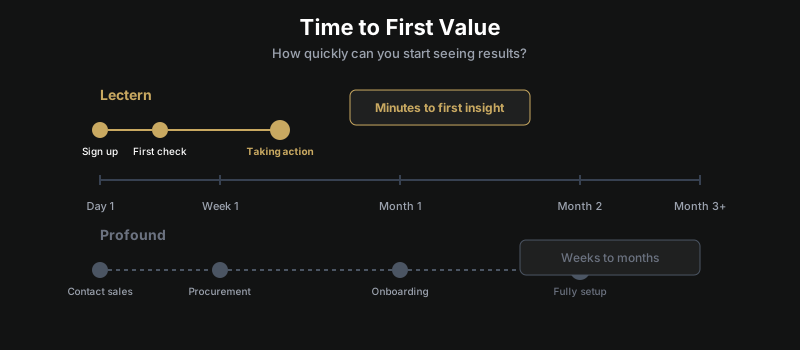
With Lectern, you can run your first AI visibility check within minutes of signing up and start taking action immediately. Plus, its growth-stage positioning means faster decision-making and accessible pricing aligned with startup budgets. Profound, on the other hand, requires an enterprise onboarding process before you’re fully set up.
What makes Lectern’s publishing network defensible?
Lectern’s access to 1,400+ credible outlets was built over four years of cultivating media relationships. Competitors can build analytics dashboards relatively quickly, but they can’t replicate years of publisher partnerships.
Build AI Visibility For Your Startup With Lectern
Both Lectern and Profound help brands understand their placements in AI assistants. The difference is what happens next.
Profound works for enterprise brands that need dashboards to monitor AI visibility and content workflows to optimize their own properties. It’s a strong fit if you have the internal teams to take what you learn and execute on it independently, but the platform stops at your own site.
If you’re a startup looking for execution alongside intelligence, Lectern takes a different approach. It combines visibility tracking with offsite publishing across 1,400+ credible outlets, giving you the kind of authoritative sources that AI models actually cite. That’s how you move from being invisible to getting recommended.
Competitors show you the gap. Lectern closes it.
Ready to see how AI talks about your brand and do something about it? Sign up for Lectern’s waiting list to start your first visibility check today.
Written by

Tyler Giroud
Cofounder at LecternTyler is a cofounder at Lectern, helping companies teach LLMs to accurately represent and recommend their products - then increasing the volume of those recommendations. After years in content marketing and traditional search, he helps founders, CROs, and growth teams turn AI search into high-intent traffic and revenue.