Beyond Ahrefs: How Lectern Turns AI Visibility Data Into Revenue

For years, companies measured online visibility through SEO: keyword rankings, backlinks, and organic traffic from Google. Tools like Ahrefs became standard for that work. They give you detailed data on how your site performs in search, and for most teams, that’s where visibility tracking starts.
But as AI assistants like ChatGPT, Claude, and Gemini start recommending brands directly, AI visibility data is becoming just as important as traditional SEO metrics. The difference is that most tools stop at surfacing it. What’s missing is the layer that turns that data into AI results. That’s what Lectern was built to do.
What Is Lectern?
Lectern is a content intelligence platform for AEO (Answer Engine Optimization) that helps growth-stage brands turn AI visibility into traffic and revenue. It gathers AI visibility intelligence through its own integrations, then layers execution alongside intelligence.
The platform measures how your brand shows up across major AI models, including ChatGPT, Gemini, Perplexity, Claude, and Grok. From there, Lectern helps you focus on the specific models your customers use and executes a strategy to improve how AI represents and recommends your brand.
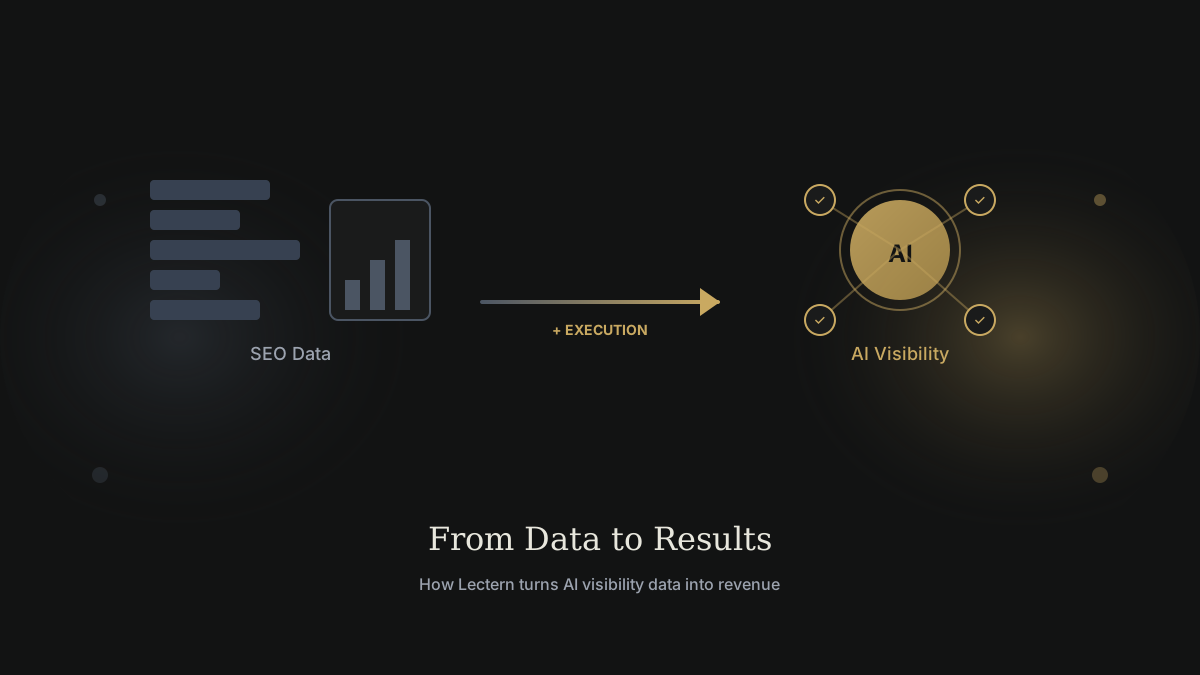
Lectern works through chat. You describe what you’re trying to achieve, and an AI agent handles research, analysis, and execution using 40+ specialized tools, from keyword research and backlink analysis to competitor benchmarking and AI visibility tracking. The difference is that Lectern doesn’t stop at the insight. It executes.
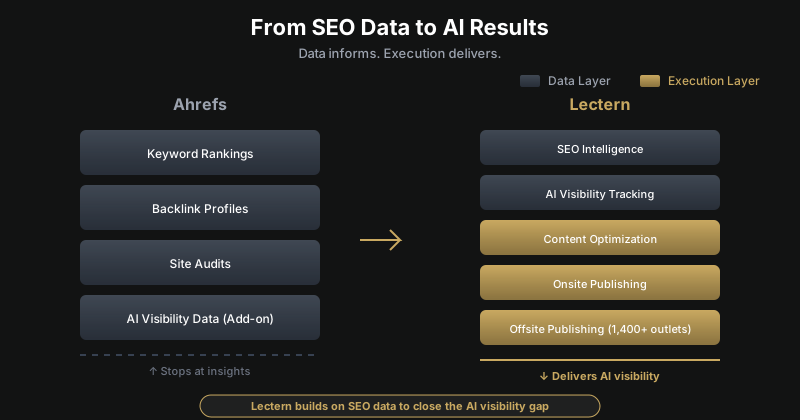
That execution applies to both onsite and offsite publishing. Most tools can help you optimize your own website, but Lectern can also get your brand published across 1,400+ credible outlets via relationships the founding team built over four years in traditional media, including TechCrunch, Business Insider, and WSJ. These are the kinds of sources AI models reference when forming recommendations, and getting cited on them is something no amount of software can replace.
What Is Ahrefs?
Ahrefs is an SEO platform, built for search data. It tracks keyword rankings, maps backlink profiles, audits technical site health, and benchmarks competitor performance in Google. If you need to understand how your website performs in organic search, Ahrefs gives you the raw numbers to do it.
The platform has recently expanded into AI visibility tracking through a paid add-on, covering citation data and competitor benchmarking across some of the most commonly used AI models. Combined with its core SEO toolkit, Ahrefs gives teams a broad view of how their brand shows up across both traditional search and AI.
Where it stops is the next step. Ahrefs can tell you what’s happening, but it doesn’t decide what to prioritize, build a strategy around it, or execute on the findings. Ultimately, what you do with the insights Ahrefs provides is up to you.
Why AI Visibility Requires More Than Data
Ahrefs and Lectern both deal in visibility, but they operate at different layers. One is built to inform. The other is built to act.
When Google ranks your site, it weighs backlinks, keyword relevance, and technical signals. But when an AI model recommends a product, it synthesizes information from sources it considers credible and forms an opinion about what to suggest. You can rank first on a traditional search engine for a keyword and still not get mentioned when someone asks an AI assistant the same question.
Ahrefs can surface that gap. It can show you where AI mentions your brand and where it doesn’t. But surfacing a gap and closing it are two different things. Closing it requires content that AI can parse and cite, published on sources AI actually trusts. That’s not a data problem. That’s an execution problem, and it’s where Lectern picks up.
Lectern analyzes that data in the context of your company, your competitors, and your industry, then acts on it. It identifies which queries matter, optimizes your content so AI can parse and cite it, and publishes across 1,400+ credible outlets that AI models reference when forming recommendations. Instead of presenting findings and leaving the next steps to you, Lectern handles them.
Ahrefs gives you the intelligence to understand the landscape. Lectern takes that intelligence and turns it into results.
What This Looks Like In Practice
Let’s say a SaaS company selling project management software runs an Ahrefs audit and finds strong domain authority, solid backlinks, and top-five Google rankings for their target keywords, but their AI visibility data tells a different story. When ChatGPT is asked, “What’s the best project management tool for remote teams?” the company doesn’t appear.
Lectern picks up where that audit left off. It checks how the company shows up across ChatGPT, Claude, Gemini, and Perplexity, and finds that none of the queries driving AI recommendations in the project management space mention them at all.
From there, it rewrites key product pages so AI can cite them accurately, creates comparison content targeting the specific prompts where their competitors dominate, and builds strategies for the brand to get published on outlets that models already reference. Over time, the brand starts appearing in AI recommendations for the same queries it was already winning on Google.
The Ahrefs data was a good starting point. What was missing was the layer that turned it into AI visibility.
Frequently Asked Questions
What’s the difference between SEO and AEO?
SEO (Search Engine Optimization) optimizes for Google search rankings by improving keywords, backlinks, and technical site performance. AEO (Answer Engine Optimization) optimizes for AI-generated answers across models like ChatGPT, Claude, Gemini, and Perplexity by making your brand citable and recommendable. The strategies overlap but aren’t identical.
Can I use both Ahrefs and Lectern?
Yes. Ahrefs provides deep SEO data. Lectern pulls in that intelligence alongside other sources, layers on AI analysis, and executes on the findings.
Is Ahrefs useful for AI visibility?
Ahrefs has added AI visibility tracking as a paid add-on, covering citation data and competitor benchmarking across several AI models. It’s useful for understanding the landscape. What it doesn’t provide is execution: getting you cited on sources AI trusts or improving how AI represents your brand.
Why does AI visibility matter?
Consumers increasingly use AI assistants for product research and recommendations. When someone asks a model for suggestions, they trust the response like advice from a knowledgeable friend. Brands that AI recommends get discovered before Google is ever opened.
Does Lectern replace my SEO tools?
Not necessarily. Lectern gathers similar intelligence through its own integrations, then adds the analysis and execution layer that turns that data into AI visibility.
From Search Data to AI Results
The shift toward AI-driven discovery means that raw SEO intelligence tools like Ahrefs, no matter how useful, are only part of what growth-stage brands need. They need someone to analyze that data in context, recommend what matters, and execute on it.
Lectern was built to be that layer: content intelligence that takes the best data available and turns it into AI visibility, traffic, and revenue.
Competitors show you the gap. Lectern closes it.
Ready to see how AI represents your brand? Get started with Lectern and measure your visibility in minutes.
Written by

Tyler Giroud
Cofounder at LecternTyler is a cofounder at Lectern, helping companies teach LLMs to accurately represent and recommend their products - then increasing the volume of those recommendations. After years in content marketing and traditional search, he helps founders, CROs, and growth teams turn AI search into high-intent traffic and revenue.